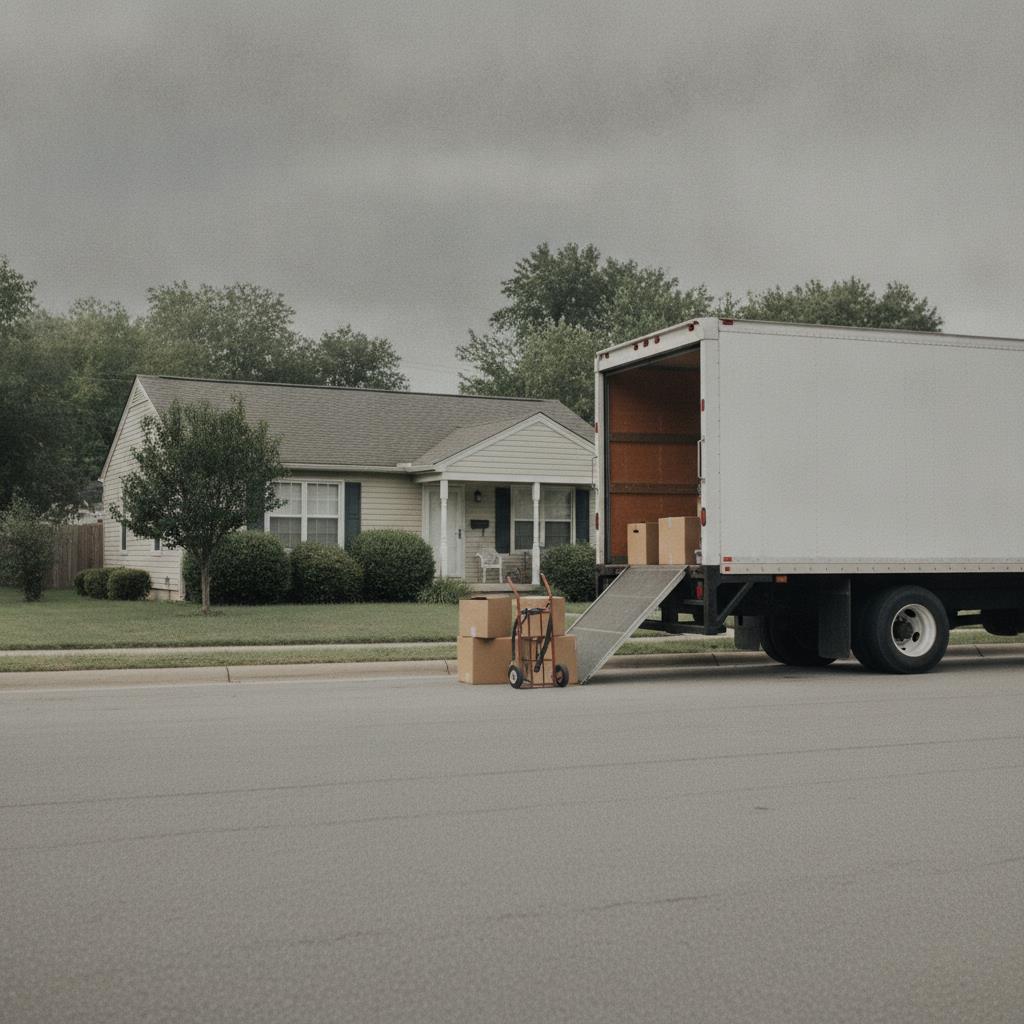
Describe the move once and up to three licensed movers who work your route send you a price. Compare all three, book one, or book none.
In a hurry? Skip the form — call us and we’ll take the details down for you.
Four quick things. This is everything a mover needs to price the job.
Want to get ahead of it? Call us and we’ll talk it through now.
Call us now
Most of it disappears into inspections, appraisals and paperwork. The movers worth having are booked two to three weeks out — and every other closing in your county lands on the same last weekend of the month as yours.
None of this is exotic. It is what happens to most people who leave the movers until the paperwork is done.
Working out who actually covers both ends of your route, then repeating your details to each one and waiting on the call back. It is a few evenings you were going to spend on the house.
Describe the move once. Up to three movers who cover your route come back to you with their own price, and you never chase anybody.
A cheap non-binding estimate is a guess, not a price. The crew re-weighs the truck, the number climbs, and your things are already on it.
Ask each mover for a binding or not-to-exceed estimate in writing. We tell you to ask, and a firm number is the only kind you can compare like for like.
Closings cluster on the last few days, so the last weekend of any month is the single hardest slot to book — and the most expensive one.
Price it the week you go under contract. If a mid-week or mid-month date works, movers will often price it noticeably lower.
Condos, co-ops and managed buildings ask for a certificate of insurance naming the building, sometimes days in advance. Not every outfit can produce one.
Every mover we match you with is licensed and insured, so a certificate is a phone call, not a crisis on the morning.
One number on its own tells you nothing. Is $2,400 a bargain or daylight robbery? Without a second and a third, you cannot know.
Three prices for the same job, side by side, is the only honest benchmark there is — and it is the cheapest negotiating position you will ever have.
Where from, where to, roughly how much there is, and when. That is everything a mover needs before quoting.
Licensed companies that cover both ends of your route and have crews free on your date. If fewer than three fit, you get fewer — we don’t pad the list.
Each contacts you with their own price. Compare them, pick one, or pick none. We are not in the middle of the booking.
Every one of these is cheaper as a line on the original quote than as a favour asked at 8am with a truck outside. Mention whatever applies and the movers will price it in.

Full pack, kitchen-and-fragiles only, or just the boxes and paper delivered a week ahead.
When your closing and your move-in don’t line up. Ask for it up front and it is one bill, not two moves.
Piano, gun safe, treadmill, fine art, aquarium. These need the right crew and the right equipment.
Different licence, different pricing model. Worth quoting separately from a local hourly rate.
The garage, the basement, the thing you were never taking anyway. Cheaper on the same truck.
An extra mover for a few hours usually costs less than the overtime a short-staffed day creates.
You do not have to decide any of it now. Mention what might apply in the form and each mover will price it as an option, so you are comparing complete numbers rather than surprises.
Two quotes for the same house can differ by hundreds for perfectly honest reasons. These are the six that move the number most.
“Is this a binding estimate, a not-to-exceed estimate, or a non-binding one?” The answer tells you whether the number you were given is a price or a hopeful guess — and it is the single fastest way to tell a serious mover from one you should walk away from.
You are going to compare movers eventually. Doing it while you still have five weeks is the difference between choosing one and settling for whoever answers.